Get the most current Rental Application form now and subscribe to download
A rental application form is a document that landlords and property managers use to screen prospective tenants. It collects personal, employment, income, and rental history information, along with consent for background and credit checks, so the landlord can decide whether to approve the applicant.
Our platform provides a fillable rental application template that you can complete and sign directly in your browser.
What is a rental application?
A rental application (also called a tenant application or apartment application) is a standardized form that a prospective renter completes before signing a lease. It gives the landlord a structured way to compare applicants and verify that they can afford the rent and are likely to follow the lease terms.
The document usually serves three purposes:
Collect verified data: Full legal name, contact details, employment, and income.
Confirm rental history: Previous addresses and landlord references.
Obtain consent: Written authorization to run credit, background, and eviction checks.
A completed application is not a lease. It does not give the applicant the right to occupy the property, and the landlord is not obligated to approve it.
Who uses a rental application
Rental applications are used across the whole housing market:
Private landlords renting out a single unit or a room.
Property management companies handling multiple buildings.
Real estate agents screening tenants on behalf of owners.
Applicants who fill out the form to apply for a property.
What to include in a rental application
A complete rental application form covers several standard blocks. The table below shows what each section should contain.
Form Section
What not to put on a rental application
Certain questions expose landlords to fair housing claims and should stay off the form entirely:
Questions about race, religion, national origin, familial status, or disability.
Questions about why an applicant left a neighborhood or who they lived with, beyond occupants.
Questions about the source of public assistance where local law prohibits it.
Questions about family plans, pregnancy, or the number of children an applicant intends to have.
Questions asking for references from religious leaders or community organizations.
Blanket waivers of tenant rights or consent language that does not specify the checks performed.
Application fees and disclosures
Many landlords charge an application fee to cover the cost of screening. Rules vary widely:
Some states cap the fee at the actual cost of the background check.
Some states require landlords to refund unused portions of the fee.
Some states prohibit application fees altogether.
Check your state and city rules before charging or paying a fee.
How to fill out a rental application
You can complete the entire form in your browser without installing extra software. Here’s the process step by step:
Step 1. Click Get Form on this page to open the fillable template in our editor.
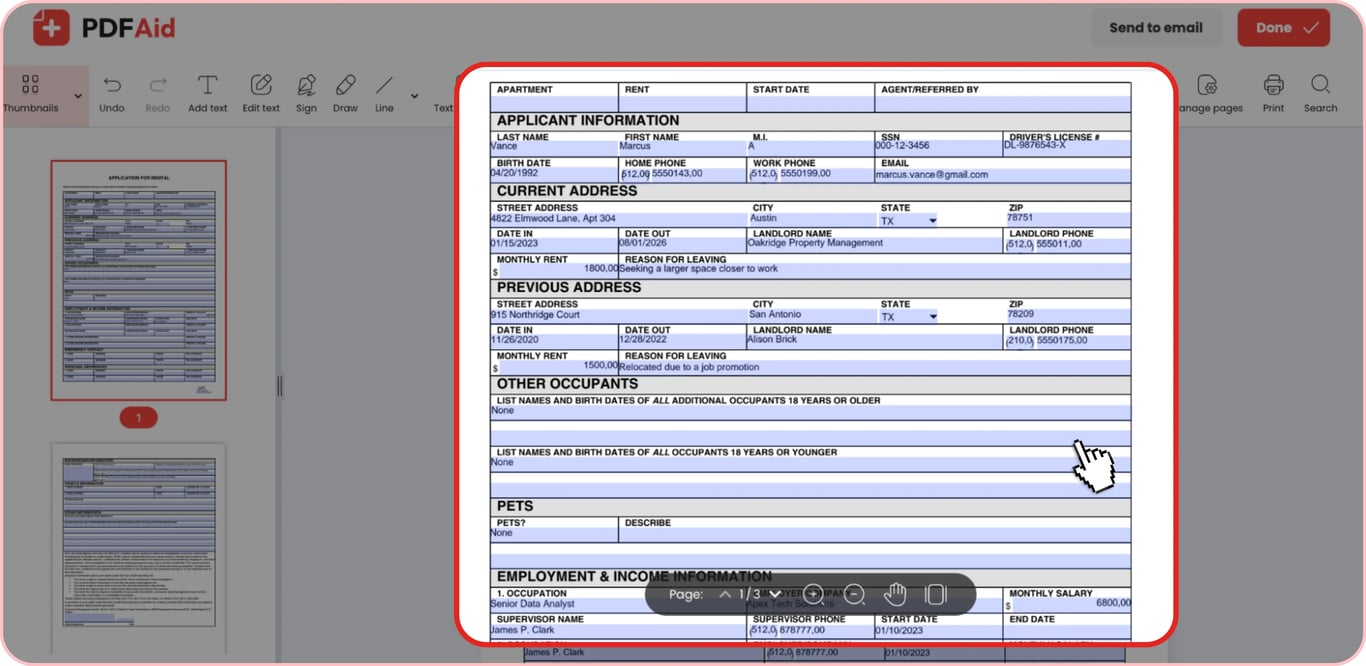
Step 2. Enter your full legal name, date of birth, and contact information.
Step 3. Fill in your current and previous addresses, including move-in and move-out dates and landlord contacts.
Step 4. Complete the employment and income section. Add your employer, position, and gross monthly income.
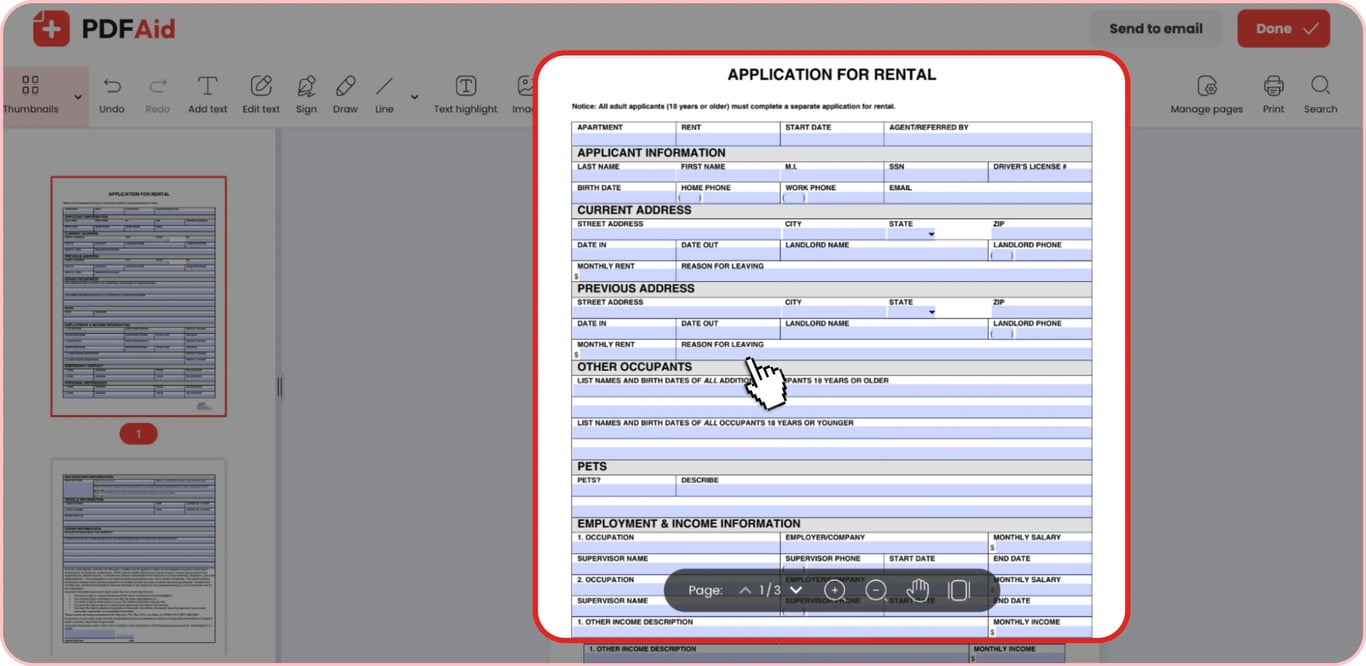
Step 5. List all occupants and pets that will live in the unit.
Step 6. Add your references with names and phone numbers.
Step 7. Read the consent section carefully, then sign and date the form.
Step 8. Click Done, choose PDF as the export format, and save the completed application.
How to screen tenants with a rental application
Once you receive completed applications, the screening process helps you compare applicants fairly and consistently. Apply the same criteria to everyone to stay compliant with fair housing law.
Verify identity: Match the government-issued ID against the name on the application.
Confirm income: Request pay stubs, tax returns, or an employer letter. A common benchmark is gross monthly income of about three times the rent.
Contact previous landlords: Ask about payment history, property condition, and whether they would rent to the applicant again.
Run a credit check: Review payment history and outstanding debts with the applicant’s written consent.
Run a background check: Follow state limits on how far back you may look and what may be considered.
Document your decision: Keep written notes on why each applicant was approved or denied.
Adverse action notices
If you deny an application based on information in a credit or background report, the Fair Credit Reporting Act requires you to send an adverse action notice. It must tell the applicant which consumer reporting agency supplied the report and explain their right to obtain a free copy and dispute inaccuracies.
Get the most current Rental Form form now
Up-to-date • Fillable • Ready to sign online